
Explore legal compliance, labor laws, environmental regulations, and tax incentives for manufacturing companies in India 2025-26. Expert guidance from Jurist Zone.
What are the Different Laws Applicable to Manufacturing Companies in India 2025-26?
Manufacturing companies in India face a complex landscape of legal requirements that govern operations, employee welfare, environmental responsibility, and tax compliance. Navigating these regulations effectively is critical to operational success and risk mitigation. This guide explains the key compliance laws for manufacturing companies in India for 2025-26, with actionable insights and practical advice to ensure full legal adherence and strategic advantage.
Overview of Legal Framework for Manufacturing
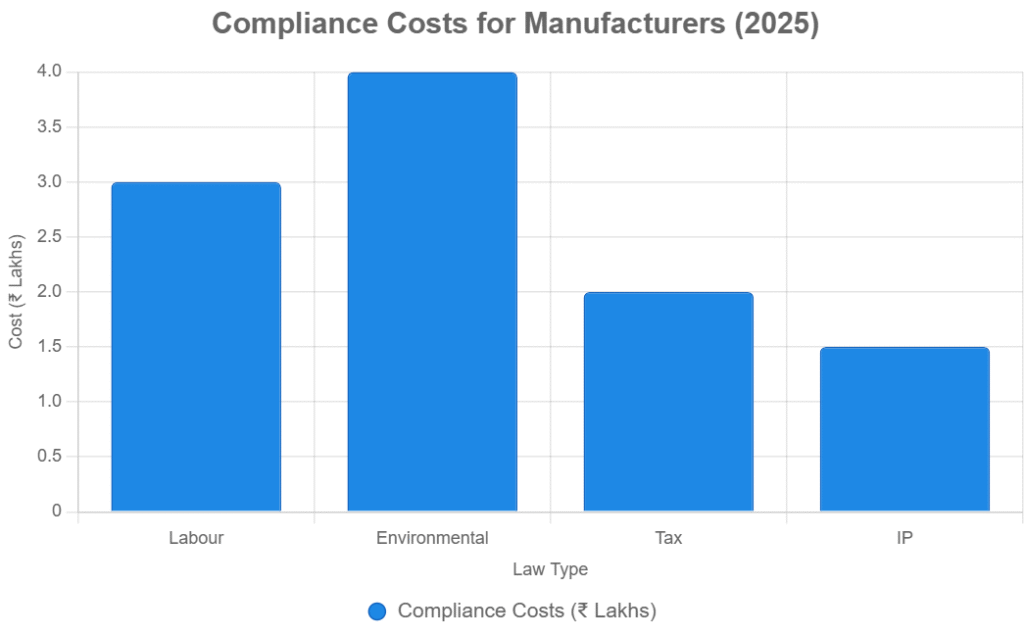
Manufacturers must comply with multiple layers of law including:
- Labour and Employment Laws: Industrial Disputes Act, Factories Act, Labour Codes 2020
- Environmental Laws: Water & Air Pollution Acts, Hazardous Waste Management Rules
- Tax and Corporate Laws: Income Tax Act, Goods and Services Tax (GST), Company Law
- Intellectual Property Laws: Patents Act, Trade Marks Act
- Industry-Specific Regulations: Compliance with manufacturing-sector-specific safety and quality norms.
Major Laws Affecting Manufacturing Companies
Labour and Employment Regulations
- Factories Act, 1948: Regulates working hours, health, safety, and welfare of workers in factories.
- Industrial Relations Code, 2020: Governs trade unions, collective bargaining, and dispute resolution.
- Minimum Wages Act & Payment of Bonus Act: Ensures fair wages and bonuses.
Environmental Compliance
- Obtain Environmental Clearance for new plants.
- Adhere to Air and Water Pollution Control Norms under respective Acts.
- Comply with Hazardous Waste Management Rules, 2016 for safe waste disposal.
Taxation and Incentives
- Benefit from the concessional corporate tax regime for manufacturing units incorporated before March 2024.
- Comply with GST filing and invoicing rules for goods and raw materials.
Intellectual Property Protections
- Register patents and trademarks to protect product designs and brand identity.
- Maintain confidentiality agreements to safeguard trade secrets.
Step-by-Step Compliance Guide for Manufacturers
Step 1: Register and Obtain Licenses
- Register under the Factories Act and obtain factory licenses.
- Apply for Pollution Control Board clearances.
Step 2: Implement Labour Welfare Systems
- Establish worker safety programs and statutory benefits like Provident Fund and Insurance.
- Maintain wage records and ensure compliance with minimum wage laws.
Step 3: Maintain Environmental and Quality Standards
- Set parameters for emissions and effluents within permissible limits.
- Audit compliance regularly and prepare Environmental Impact Assessments (EIA).
Step 4: File Taxes and Avail Incentives
- File periodic GST returns and income tax filings.
- Apply for Production Linked Incentives (PLI) if eligible.
Manufacturing Compliance ROI Calculator
Estimate the return on investment for legal compliance in manufacturing operations.
Unique Insights and Pitfalls
- Non-compliance leads to hefty penalties, production delays, and reputational damage.
- Engage legal experts early to align contracts, IP, and labour policies with dynamic laws.
- Digital tools for compliance tracking can minimize errors and audit failures.
Case Study: Tata Steel and Environmental Compliance (2023)
Tata Steel faced a major challenge when expanding its manufacturing capacity due to stringent environmental regulations. By proactively engaging with environmental authorities, investing in state-of-the-art emission control technology, and maintaining transparent reporting, Tata Steel secured timely environmental clearances and set industry benchmarks for sustainable manufacturing practices. This case highlights the importance of legal foresight and operational diligence in manufacturing compliance.
FAQ Section
- What labour laws must manufacturing companies comply with in India?The
Factories Act, Industrial Relations Code, Minimum Wages Act, and others regulate worker welfare and dispute resolution. - What environmental regulations apply to manufacturing plants?
Water and Air Pollution Control Acts and Hazardous Waste Rules primarily govern environmental compliance. - Are there tax benefits for manufacturers in India?
Yes, including concessional corporate tax rates and eligibility for Production Linked Incentive schemes. - How important is intellectual property for manufacturers?
Protecting patents and trademarks is critical for competitive advantage and brand protection. - What are the penalties for non-compliance?
Penalties range from fines and operational shutdowns to criminal charges in serious cases. - Can Jurist Zone help with manufacturing compliance?
Yes, offering tailored legal advice on labour, environmental, corporate, and IP laws to ensure full compliance. - How often should compliance audits be conducted?
Regularly, at least annually, or more often depending on regulatory requirements.
Stay compliant and competitive in 2025-26. Contact Jurist Zone today for a free consultation or download our Manufacturing Compliance Checklist.
- Mobile: 7011465759
- Email: pyushverma@juristzone.co.in
Disclaimer: This content is for informational purposes and not legal advice. Consult Jurist Zone or qualified counsel for tailored guidance.